

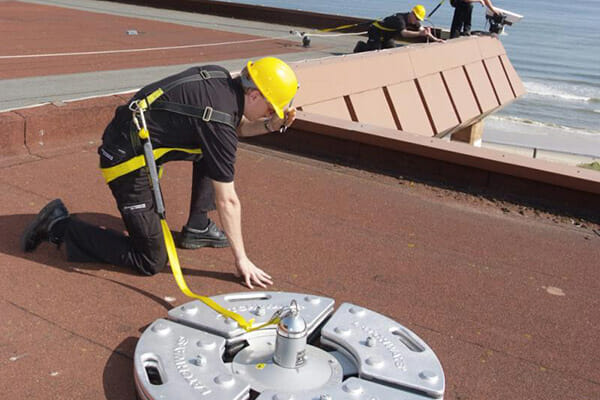
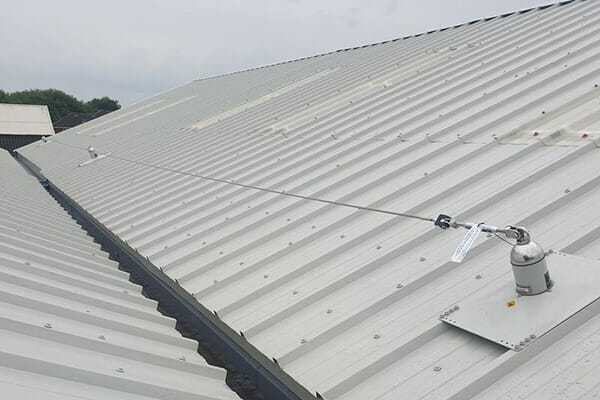
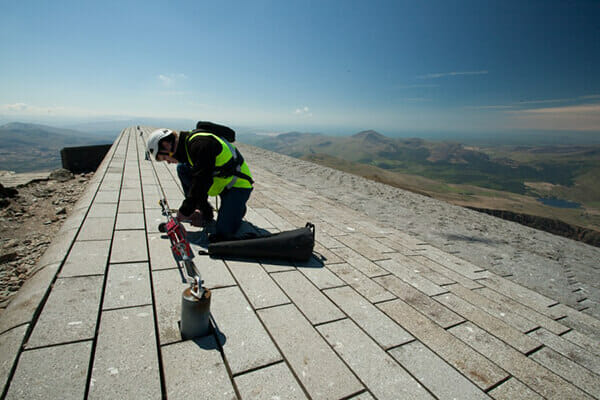

In the industry there are many contractors, businesses, manufacturers, even safety organisations who not only provide false, misleading and confusing information to the fall protection industry but encourage such behaviour and attitude. Below fallarrest.com explains the facts and truth about the term ‘MANSAFE‘ which is often purposefully misused.
Terminology in fall protection.
There are many terms used in the world of fall protection, and there are many working at height manufacturers, businesses, and contractors who will use such terms to misinform the market in order to promote their products, and the issue here is that this could cost you either your life or very serious financial consequences as both the end user & client.
MANSAFE is not a generic term: Why the fall protection industry must use correct terminology and be honest with clients and end users.
In the fall protection industry, terminology matters. Clear, accurate language ensures proper specification, installation, certification, and ultimately the safety of workers operating at height, yet one term continues to be widely misused across the market: MANSAFE.
Many contractors, installers, and even specifiers use the word ‘mansafe‘ to describe almost any type of horizontal fall protection system, and this practice is technically incorrect and contributes to confusion in the marketplace. Understanding the correct use of the term and why some contractors deliberately blur its meaning is important for clients, building owners, and safety professionals.
What MANSAFE really is.
Mansafe is a registered product line and brand name owned by Latchways plc, now part of MSA Safety, and the Latchways Mansafe Horizontal Lifeline System refers specifically to a proprietary horizontal lifeline fall protection system designed for workers operating at height. The system is engineered with specific components, including:
- Stainless steel lifeline cable.
- Energy-absorbing intermediate posts.
- Engineered end anchors and brackets.
- Controlled load management through the support structure.
The system was developed with significant engineering and testing to meet international standards, such as:
- EN 795 – Anchor devices for fall protection.
- CEN/TS 16415 – Multi-user anchor devices.
Therefore, MANSAFE is a brand name, not a generic category of fall protection. The best way to explain this is the HOOVER example, where most people who own a vacuum cleaner say that they own a Hoover, yet they don’t. If it is by the manufacturer Hoover, then they do; if not, then they have a vacuum cleaner produced by another. The only thing is this will not have the ability to cost you a very serious injury or your life, and using it generically is similar to calling all vacuum cleaners hoovers or all adhesive bandages Band-Aids.
The correct generic term.
When referring to fall protection systems that allow users to travel along a cable line, the technically correct term is:
Horizontal Lifeline System (HLL) or more broadly, a cable-based fall arrest system.
Other manufacturers produce their own systems, such as:
- Kee Line by Kee Safety.
- Fall Angel by Bettersafe.
- Soter Horizontal Lifeline by SFS.
Each system has different engineering principles, load distribution methods, and certification requirements, and they should therefore be described by their correct product names or as generic horizontal lifeline systems, not as ‘mansafe’.
Why do some contractors deliberately misuse the term?
Despite the technical distinction, the term ‘mansafe‘ is commonly used by contractors and installers across the industry, where in most cases this is not accidental, and there are several reasons why the terminology is deliberately blurred.
Market familiarity.
The term ‘mansafe’ has become widely recognised among:
- Building owners.
- Roof contractors.
- Facilities managers.
Because of this recognition some contractors use the word simply because it is what clients understand, even when the installed system is not the original product and it’s also because other manufacturers find it easier to copy another’s success rather than promote their own systems, it saves them on the cost of expenses such as marketing, and piggy back on others success, this creates brand dilution and technical ambiguity.
Perceived credibility.
The Mansafe system has historically been associated with:
- Rigorous testing.
- Engineered design.
- Established certification.
- Established, professional & trusted contractors.
Some contractors leverage the familiarity of the name to imply that their installation carries the same engineering pedigree, even when the system supplied is entirely different, and this can mislead clients into assuming equivalence between systems that may have very different performance characteristics..
Simplifying the sales process.
Using a generic term allows contractors to avoid explaining the technical differences between systems, such as:
- Cable tension management.
- System deflection distances.
- Structural loading requirements.
- Energy-absorbing post technology.
Explaining these details requires technical competence and design support, and by calling everything ‘mansafe,’ some installers simplify the conversation but reduce transparency.
Specification manipulation.
Another common issue arises during tendering or specification. A specification might state:
Supply and install a ‘mansafe system.’
Because the word is treated as generic, contractors will supply lower-cost alternatives that were never intended by the specifier.
This can create:
- Liability concerns.
- Certification issues.
- Compliance disputes.
Especially if the installed system performs differently during a fall event.
Why correct terminology matters.
Misusing the term ‘mansafe‘ is not just a linguistic issue; it has real consequences for safety and compliance.
Engineering design.
Different systems impose different loads on structures, and misidentifying the system can result in:
- Inadequate anchor design.
- Excessive deflection during a fall.
- Incorrect structural assumptions.
Certification and inspection.
Inspection reports must clearly identify:
- Component types.
- Installation method.
- System manufacturer.
Using generic terminology makes future inspections and recertification difficult or inaccurate.
Legal liability.
In the event of an incident, documentation must demonstrate that:
- The correct system was installed.
- The correct system was specified.
- The system was inspected according to the manufacturer’s requirements.
Ambiguous terminology creates legal risk for contractors, specifiers, and building owners.
Best practice for the industry.
To avoid confusion and protect end users, industry professionals should adopt the following practices:
- Avoid using brand names as generic descriptors.
- Specify the exact manufacturer and product name.
- Use “Horizontal Lifeline System” as the generic term.
- Ensure drawings and inspection certificates match the installed system.
Clear technical language ensures that everyone, from designer to installer to inspector, understands exactly what system is being installed and relied upon for worker safety.
Conclusion.
The term Mansafe refers to a specific proprietary system developed by Latchways plc, now part of MSA Safety, and should not be used as a catch-all label for every cable fall protection system installed on roofs or structures. While the term has become widely recognised, its misuse, whether accidental or deliberate, creates confusion in specifications, procurement, inspection, and compliance.
In an industry where precision directly affects safety, terminology is not just semantics; it is part of the engineering integrity that protects workers at height.